
SELECTED IMPORTANT SAFETY INFORMATION: JIVI is contraindicated in patients who have a history of hypersensitivity reactions to the active substance, polyethylene glycol (PEG), mouse or hamster proteins, or other constituents of the product. CONTINUE READING BELOW

This site is intended for US residents.
SELECTED IMPORTANT SAFETY INFORMATION: JIVI is contraindicated in patients who have a history of hypersensitivity reactions to the active substance, polyethylene glycol (PEG), mouse or hamster proteins, or other constituents of the product. CONTINUE READING BELOW
SELECTED IMPORTANT SAFETY INFORMATION: JIVI is contraindicated in patients who have a history of hypersensitivity reactions to the active substance, polyethylene glycol (PEG), mouse or hamster proteins, or other constituents of the product. CONTINUE READING BELOW


A Real-World Evidence
(RWE) Study of Jivi®
Review the Jivi Protect VIII Main Study to ground your evaluation of the HEM-POWR RWE Study data.
PROTECT VIII Study Design (N=112, Adolescents and Adults)1

112 previously treated patients (PTPs), ≥12 years of age, on a prophylaxis treatment regimen entered a 10‑week run‑in period where they received 25 IU/kg twice weekly of Jivi®. Of the 112 patients who entered the study, 110 patients completed the 10‑week run-in period.1*
Following the run-in period, patients were assigned or randomized to a treatment arm based on bleeding tendency. These patients were treated for 26 weeks.1
Among 97 patients with low bleeding tendencies:
- 11 received 30-40 IU/kg twice weekly
- 43 patients received 45-60 IU/kg every 5 days
- 43 patients were randomized into the every-7-day treatment arm†
The 13 patients with high bleeding tendencies received 30-40 IU/kg twice weekly for 26 weeks.1
*An additional 20 previously treated patients entered a control arm of on‑demand treatment with Jivi.
†Treatment success in the every‑7‑day arm was not established. IU, international unit.
In the PROTECT VIII main study: Effective bleed protection with Jivi1
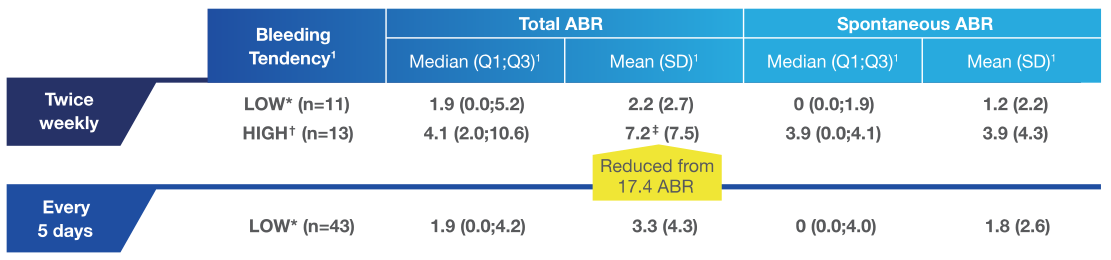
Treatment success in the every-7-day arm was not established
- Total ABR in all patients in the every-7-day dosing arm (n=43); median (Q1;Q3) ABR for total bleeds of 3.9 (0.0;6.5) and a mean (±SD) of 6.43 (±10.04)2,3
- Total ABR in patients who completed every-7-day dosing treatment (n=32); median (Q1;Q3) ABR of 1.0 (0.0;4.3) and a mean (±SD) of 2.67 (±3.82)2,3
- Spontaneous ABR in all patients in the every-7-day arm (n=43); median (Q1;Q3) of 1.9 (0.0;6.3) and mean (±SD) of 5.42 (±9.79)2,3
- Spontaneous ABR in patients who completed every-7-day dosing treatment (n=32); median (Q1;Q3) of 0.0 (0.0;2.1) and mean (±SD) of 1.65 (±2.89)2,3
*Patients with 0 or 1 spontaneous bleed (defined as a joint or muscle bleed and no identified trauma) during weeks 1-10 of the main study.2
†Patients with 2 or more spontaneous bleeds (defined as joint or muscle bleeds and no identified trauma) during weeks 1-10 of the main study.2
‡n=9/13 of these patients were on prior prophylaxis and had a mean number total ABR of 17.4 before entering the main study.1
ABR, annualized bleed rate; Q1, first quartile; Q3, third quartile; SD, standard deviation.
In the PROTECT VIII main study: Percent of patients with zero total bleeds in the prophylaxis arms with Jivi1,4
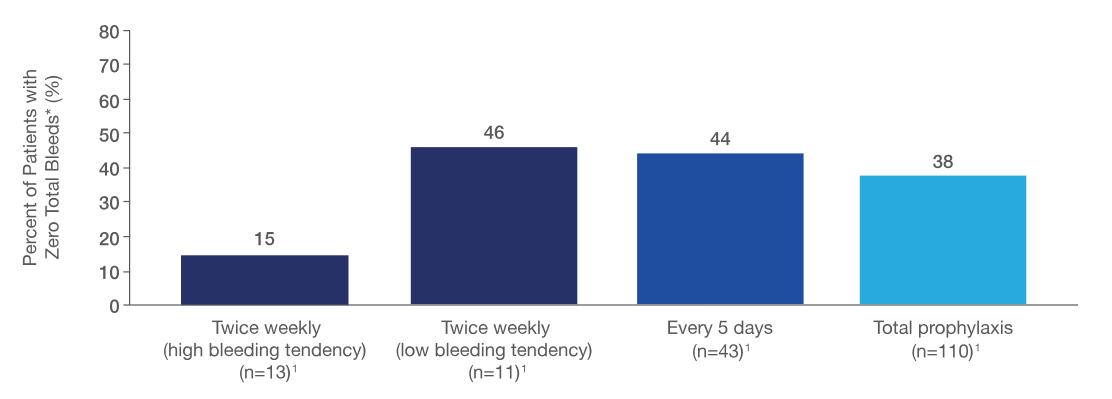
*Total bleeds include spontaneous bleeds, trauma bleeds, and joint bleeds.
PROTECT VIII Main1 and Extension5 FVIII Utilization
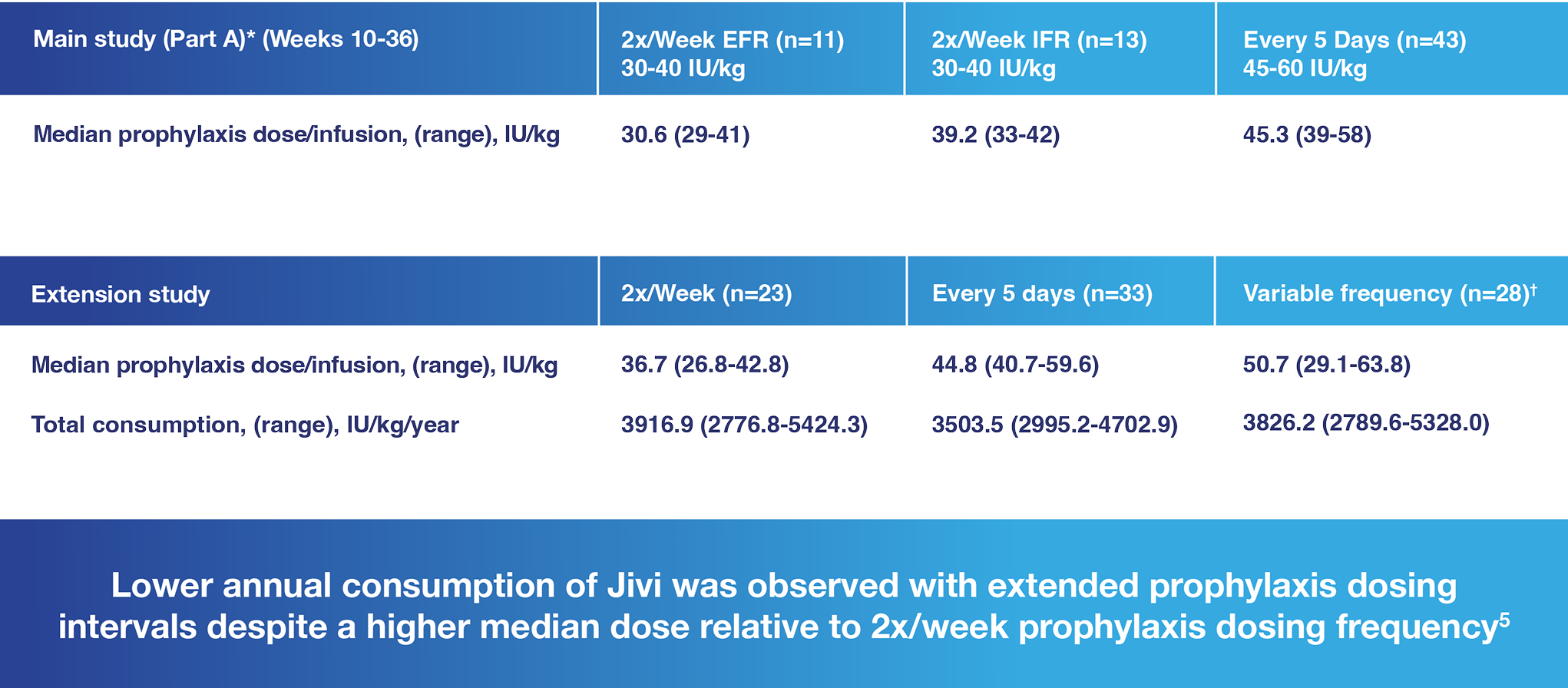
Treatment success in the every-7-day arm was not established
*Main efficacy period: 26 weeks.†Patients who switched regimens during the extension (to a higher frequency, n=20; to a lower frequency, n=4; switched twice and were receiving their original frequency at interim analysis, n=4).EFR, eligible for randomization; FVIII, Factor VIII; IFR, ineligible for randomization.
In the PROTECT VIII main study: Jivi safety and tolerability in previously treated adolescents and adults1
Demonstrated safety profile for Jivi in the main study

2/134 previously
treated patients
Hypersensitivity reactions were transient (n=2/134)2
- Allergic reactions occurred in two patients. In one patient the allergic reaction was related to polyethylene glycol (PEG), a component of Jivi1,2

Zero FVIII inhibitors2
- No confirmed case of inhibitors against FVIII occurred2*

Four most common side effects: headache, cough, nausea and fever1
*Factor VIII inhibitor (1.7 BU/mL) was reported in one previously treated adult subject. Repeat testing did not confirm the presence of a Factor VIII inhibitor.1
HEM-POWR Real-World Evidence (RWE) Study Design (severe subgroup, N=250)6

HEM-POWR is a multinational, open-label, prospective, non-interventional, multicenter cohort study of Jivi in previously treated patients 12 years or older with hemophilia A in a real-world clinical setting.6
As of the database cutoff, June 2025, 371 patients were enrolled in the study. A sixth interim analysis was conducted using the following groups: Full Analysis Set: 306 patients,* Modified Full Analysis Set: 279 patients,† and Safety Analysis Set: 370 patients.6‡
Previously treated patients ≥12 years of age with a diagnosis of hemophilia A, without previous history of inhibitors or with previous history of inhibitors on standard prophylaxis therapy for at least 1 year prior to study entry, and starting or currently receiving Jivi with any kind of treatment modality (ie, on-demand, prophylaxis, or intermittent prophylaxis) were eligible for enrollment into the study.6
Data points were collected from patient e-diaries and physician records, and ethical approval was obtained at all sites. Statistical analyses were descriptive and explorative in nature.6
This real-world study included patients that had mild or moderate disease and female patients. These patients are not included in the Jivi label and the results presented from the Full and Modified Analysis Set include only those for male patients with severe hemophilia.6
The prescribed treatment modality at baseline was: prophylaxis (97.9%) or on-demand (1.8%) and intermittent prophylaxis (0.4%). Of the 306 patients, 245 (80%) were pretreated with Jivi.6
Limitations: Real-World Evidence studies may not use randomization and have treatment variables that are not under the control of the investigators. The lack of randomization and investigator control increases the potential for bias and confounding variables that could impact the study outcomes. Findings from this study may be subject to bias, such as patient selection and bleeding event recall bias, and limitations to availability of historical medical data.7
*306 previously treated patients were included in the Full Analysis Set and 279 in the Modified Full Analysis Set. 52 mild and moderate patients were excluded from this analysis as these populations were not studied in the PROTECT VIII pivotal trial. An additional 4 patients, including 2 female patients, were excluded from this analysis because their severity was not defined.6
†Modified Full Analysis Set: patients with at least 90 days of documented bleed data.6
‡370/371 patients were included in the Safety Analysis Set.6 One patient under 12 was included in the Safety Analysis Set.8 The one patient excluded from the Safety Analysis Set did not receive at least 1 dose of Jivi during the observation period (documented by physician or entered in patient diary).6
In the HEM-POWR RWE Study (6th Interim Analysis) (severe subgroup)
Mean (SD) ABR during 12 months prior to Jivi initiation* and during observation period9†

Median (Q1,Q3) ABR during 12 months prior to Jivi initiation* and during observation period9†

Limitations: Real-World Evidence studies may not use randomization and have treatment variables that are not under the control of the investigators. The lack of randomization and investigator control increases the potential for bias and confounding variables that could impact the study outcomes. Findings from this study may be subject to bias, such as patient selection and bleeding event recall bias, and limitations to availability of historical medical data.7
*245/306 patients were pretreated with Jivi before study enrollment.6 12 months of their bleeding history was captured retrospectively before starting Jivi.10
†Each patient in the study will be followed during a 36-month period that begins with their first study visit receiving Jivi.9 As of the sixth interim analysis cutoff date, the median study time completed by patients was 2.7 years.‡Prior observation data is missing for 4 patients.9 mFAS, modified full analysis set.
In the HEM-POWR RWE Study (6th Interim Analysis) (severe subgroup)
Percent of patients with zero bleeds during the observation period, mFAS9*
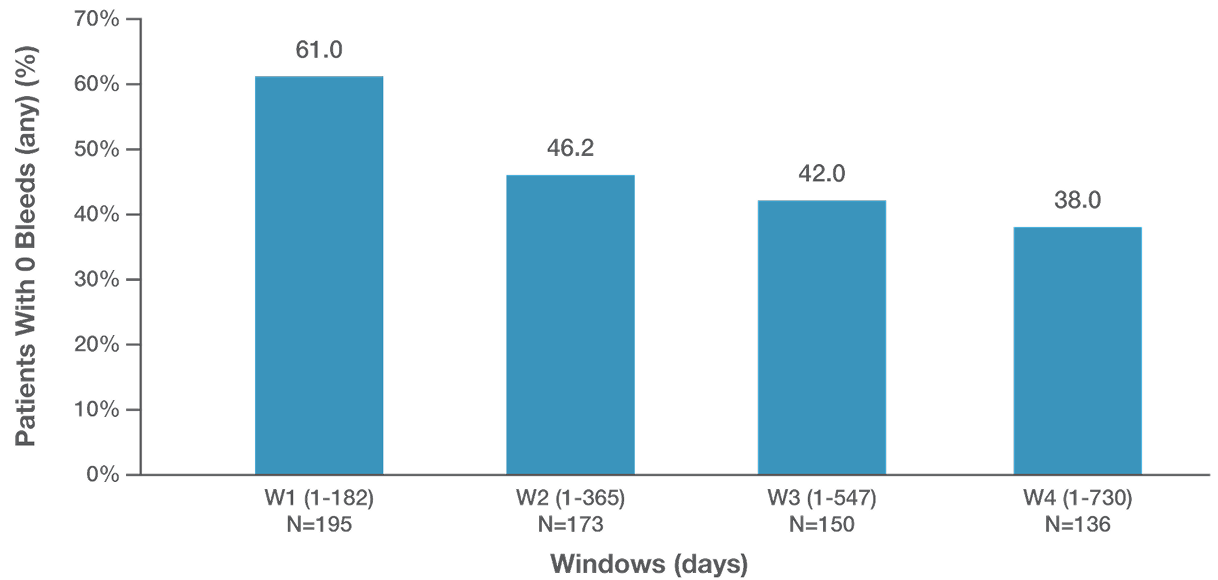
*Each patient in the study will be followed during a 36-month observation period that begins with their first study visit receiving Jivi.9 As of the sixth interim analysis cutoff date, the median study time completed by patients was 2.7 years. W, window.
Percent of patients by dosing frequency at baseline (n=225, mFAS)11

Limitations: Real-World Evidence studies may not use randomization and have treatment variables that are not under the control of the investigators. The lack of randomization and investigator control increases the potential for bias and confounding variables that could impact the study outcomes. Findings from this study may be subject to bias, such as patient selection and bleeding event recall bias, and limitations to availability of historical medical data.7
†Every day (n=4) and every 2 days (n=25).
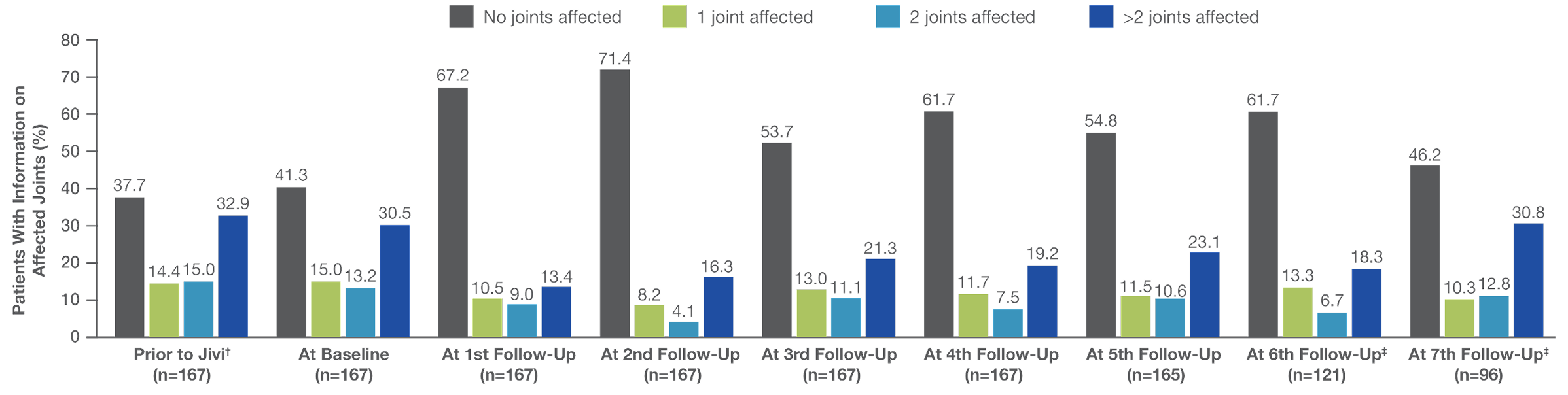
In the HEM-POWR RWE Study (6th Interim Analysis) (severe subgroup)
Percent of patients with affected joints* prior to Jivi initiation, at baseline, and at least 2 years of observation (FAS)12
Limitations: Real-World Evidence studies may not use randomization and have treatment variables that are not under the control of the investigators. The lack of randomization and investigator control increases the potential for bias and confounding variables that could impact the study outcomes. Findings from this study may be subject to bias, such as patient selection and bleeding event recall bias, and limitations to availability of historical medical data.7
*Affected joints are determined on an individual basis per investigator’s clinical judgment based on the health status of the patient’s joint, irrespective of the number of joint bleeds that occurred over a certain period of time.13
†Retrospective capture of joint history within 12 months before patient went on Jivi independent of the HEM-POWR study timeline; follow-up windows defined as half-year intervals from initial visit (baseline).10,12
‡Follow-up windows defined as 180-day intervals (±90 days) from initial visit. The initial visit (baseline) was the first visit in the study.12 FAS, full analysis set.
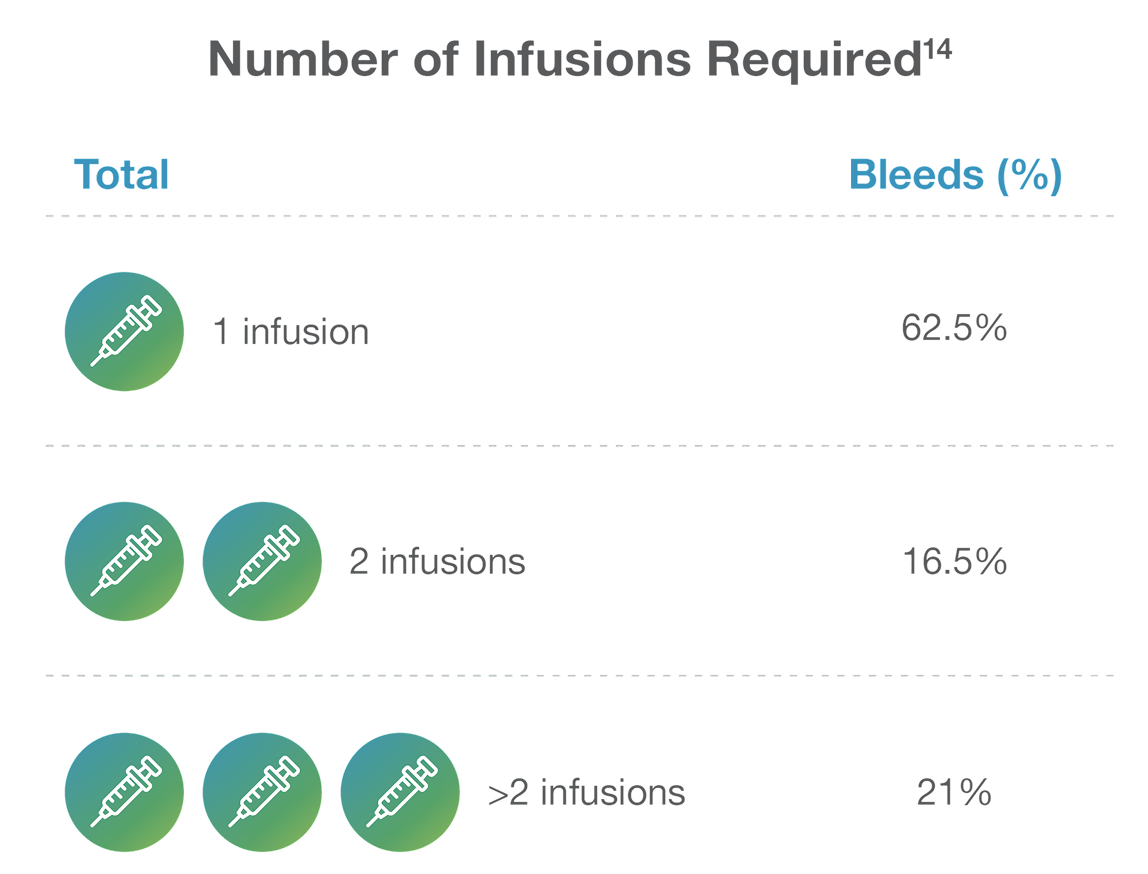
Resolution of Bleeds With Infusions in Patients With Severe Hemophilia A,* FAS14
Limitations: Real-World Evidence studies may not use randomization and have treatment variables that are not under the control of the investigators. The lack of randomization and investigator control increases the potential for bias and confounding variables that could impact the study outcomes. Findings from this study may be subject to bias, such as patient selection and bleeding event recall bias, and limitations to availability of historical medical data.7
*The number of infusions needed to resolve a bleed is based on the recorded number of infusions needed to resolve a bleed (n=916).14
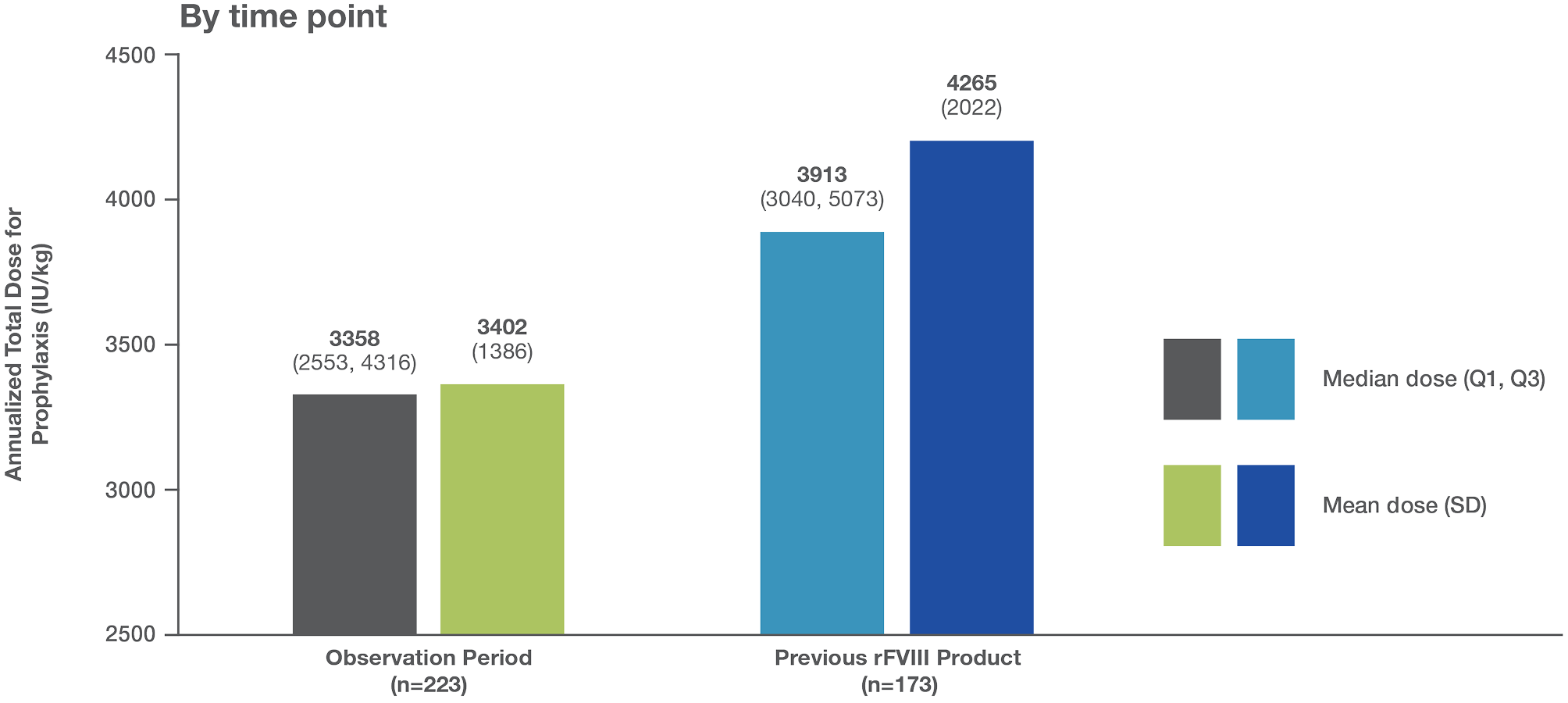
In the HEM-POWR RWE Study (6th Interim Analysis)Utilization of Jivi by Patients With Severe Hemophilia A During the Observation Period and Utilization of Previous Product, mFAS11,15
Limitations: Real-World Evidence studies may not use randomization and have treatment variables that are not under the control of the investigators. The lack of randomization and investigator control increases the potential for bias and confounding variables that could impact the study outcomes. Findings from this study may be subject to bias, such as patient selection and bleeding event recall bias, and limitations to availability of historical medical data.7
rFVIII, recombinant Factor VIII.
In the HEM-POWR RWE Study (6th Interim Analysis) (Safety Analysis Set,* N=370)6†
Jivi safety and tolerability
Incidence of patients with adverse events/serious adverse events in the study16:
- Drug-related treatment-emergent adverse events (TEAEs): 0.81% (n=3)16
- Drug-related serious TEAEs: 0.27% (n=1)16
- One patient tested positive for an anti-Factor VIII antibody.16 This was a low-titer transient inhibitor to Factor VIII that resolved within 4 months17
- There were 2 non–drug-related TEAEs (tendonitis and arthropathy) that led to the discontinuation of Jivi and study discontinuation16
- Adverse events of special interest (AESIs) included low-titer transient inhibitor (n=1, study drug–related; resolved in 4 months), petit mal epilepsy (n=1), and arthralgia (n=1)16,17
Limitations: Real-World Evidence studies may not use randomization and have treatment variables that are not under the control of the investigators. The lack of randomization and investigator control increases the potential for bias and confounding variables that could impact the study outcomes. Findings from this study may be subject to bias, such as patient selection and bleeding event recall bias, and limitations to availability of historical medical data.7
As a Real-World Evidence study, there were no regularly scheduled assessments of drug tolerability. Patients participating in HEM-POWR were not required to visit study sites for efficacy or safety assessments. Patients may have visited sites as routine clinical care visits and/or may have reported adverse events to investigators who were then required to document and report the events to the study sponsor.7
*Patients had the option to report side effects at any time or during their follow-up visit.7†370/371 patients were included in the Safety Analysis Set.6 One patient under 12 was included in the Safety Analysis Set.8 The one patient excluded from the Safety Analysis Set did not receive at least 1 dose of Jivi during the observation period (documented by physician or entered in patient diary).6
HEM-POWR RWE Study (6th Interim Analysis) Summary
- Most patients (57.2%) with hemophilia A were treated prophylactically with a 2x/week Jivi regimen before enrolling in the study as well as during the study observation period11,15
- An every-5-day regimen was the second-most frequent regimen used during the observation period (21%)11
- Mean ABRs were lower for all bleed types during the observation period than before the initial use of Jivi
- 46.2% and 38% of patients reported no bleeds at the end of the first and second year, respectively, during the observation period9
- 79% of treated bleeds were resolved with ≤2 infusions of Jivi14
- Tendonitis and arthropathy led to discontinuation in 1 patient each. Three AESIs occurred, including a low-titer, transient FVIII inhibitor16
- The percentage of patients without any affected joints tends to be higher during the observation period, compared to baseline and prior to Jivi12
- The annualized utilization of Jivi was lower during the observation period compared with utilization of the previous rFVIII product5,11,15
Dosing with Jivi for routine prophylaxis: Jivi dosing frequency can be adjusted based on bleeding episodes
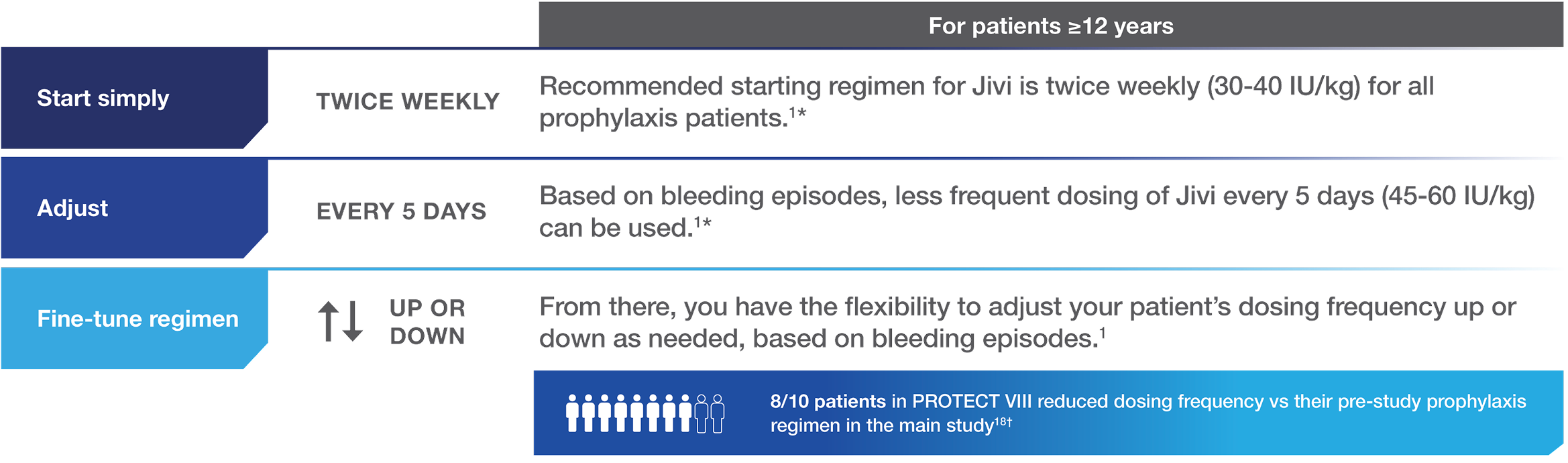
*100% of patients in the every-5-days and twice-weekly dosing arms remained on the same dosing regimen for the duration of the main study.1
†n=40/47 patients in the every-5-days and twice-weekly dosing arms for whom prior prophylaxis dosing records were available.18

INDICATION
JIVI® is a recombinant DNA-derived, Factor VIII concentrate indicated for use in previously treated adults and pediatric patients 7 years of age and older with hemophilia A (congenital Factor VIII deficiency) for:
On-demand treatment and control of bleeding episodes.
Perioperative management of bleeding.
Routine prophylaxis to reduce the frequency of bleeding episodes.
Limitations of use
JIVI is not indicated for use in:
Children <7 years of age due to a greater risk for hypersensitivity reactions and/or loss of efficacy.
Previously untreated patients (PUPs).
Treatment of von Willebrand disease.
IMPORTANT SAFETY INFORMATION
JIVI is contraindicated in patients who have a history of hypersensitivity reactions to the active substance, polyethylene glycol (PEG), mouse or hamster proteins, or other constituents of the product.
Hypersensitivity reactions, including severe allergic reactions, have occurred with JIVI. Monitor patients for hypersensitivity symptoms. Early signs of hypersensitivity reactions, which can progress to anaphylaxis, may include chest or throat tightness, dizziness, mild hypotension and nausea. If hypersensitivity reactions occur, immediately discontinue administration and initiate appropriate treatment.
JIVI may contain trace amounts of mouse and hamster proteins. Patients treated with this product may develop hypersensitivity to these non-human mammalian proteins.
Hypersensitivity reactions may also be related to antibodies against polyethylene glycol (PEG).
Neutralizing antibody (inhibitor) formation has occurred following administration of JIVI. Carefully monitor patients for development of Factor VIII inhibitors, using appropriate clinical observations and laboratory tests. If expected plasma Factor VIII activity levels are not attained or if bleeding is not controlled as expected with administered dose, suspect the presence of an inhibitor (neutralizing antibody).
An immune response associated with IgM anti-PEG antibodies, manifested as symptoms of acute hypersensitivity and/or loss of drug effect, has occurred with JIVI administration. In the clinical trials, the IgM anti-PEG antibodies disappeared within 4-6 weeks. No immunoglobulin class switching from IgM to IgG has been observed.
A low post-infusion Factor VIII level, in absence of detectable Factor VIII inhibitors, may be due to loss of treatment effect related to high titers of anti-PEG IgM antibodies. In these cases, discontinue JIVI and switch patients to a different anti-hemophilic product.
A reduced recovery of Factor VIII after start of JIVI treatment may be due to transient low titers of anti-PEG IgM antibodies. In these cases, increase the dose of JIVI until recovery of Factor VIII returns to expected levels.
The most common (incidence ≥5%) adverse reactions in clinical trials in previously treated patients (PTPs) ≥7 years of age were headache, fever, cough, and abdominal pain.
For additional important risk and use information, please see the full Prescribing Information.
You are encouraged to report side effects or quality complaints of prescription drugs to the FDA. Visit www.fda.gov/medwatch or call 1-800-FDA-1088. For Bayer products, you can report these directly to Bayer by clicking here.
INDICATION
JIVI® is a recombinant DNA-derived, Factor VIII concentrate indicated for use in previously treated adults and pediatric patients 7 years of age and older with hemophilia A (congenital Factor VIII deficiency) for:
On-demand treatment and control of bleeding episodes.
Perioperative management of bleeding.
Routine prophylaxis to reduce the frequency of bleeding episodes.
Limitations of use
JIVI is not indicated for use in:
Children <7 years of age due to a greater risk for hypersensitivity reactions and/or loss of efficacy.
Previously untreated patients (PUPs).
Treatment of von Willebrand disease.
IMPORTANT SAFETY INFORMATION
JIVI is contraindicated in patients who have a history of hypersensitivity reactions to the active substance, polyethylene glycol (PEG), mouse or hamster proteins, or other constituents of the product.
Hypersensitivity reactions, including severe allergic reactions, have occurred with JIVI. Monitor patients for hypersensitivity symptoms. Early signs of hypersensitivity reactions, which can progress to anaphylaxis, may include chest or throat tightness, dizziness, mild hypotension and nausea. If hypersensitivity reactions occur, immediately discontinue administration and initiate appropriate treatment.
JIVI may contain trace amounts of mouse and hamster proteins. Patients treated with this product may develop hypersensitivity to these non-human mammalian proteins.
Hypersensitivity reactions may also be related to antibodies against polyethylene glycol (PEG).
Neutralizing antibody (inhibitor) formation has occurred following administration of JIVI. Carefully monitor patients for development of Factor VIII inhibitors, using appropriate clinical observations and laboratory tests. If expected plasma Factor VIII activity levels are not attained or if bleeding is not controlled as expected with administered dose, suspect the presence of an inhibitor (neutralizing antibody).
An immune response associated with IgM anti-PEG antibodies, manifested as symptoms of acute hypersensitivity and/or loss of drug effect, has occurred with JIVI administration. In the clinical trials, the IgM anti-PEG antibodies disappeared within 4-6 weeks. No immunoglobulin class switching from IgM to IgG has been observed.
A low post-infusion Factor VIII level, in absence of detectable Factor VIII inhibitors, may be due to loss of treatment effect related to high titers of anti-PEG IgM antibodies. In these cases, discontinue JIVI and switch patients to a different anti-hemophilic product.
A reduced recovery of Factor VIII after start of JIVI treatment may be due to transient low titers of anti-PEG IgM antibodies. In these cases, increase the dose of JIVI until recovery of Factor VIII returns to expected levels.
The most common (incidence ≥5%) adverse reactions in clinical trials in previously treated patients (PTPs) ≥7 years of age were headache, fever, cough, and abdominal pain.
For additional important risk and use information, please see the full Prescribing Information.
You are encouraged to report side effects or quality complaints of prescription drugs to the FDA. Visit www.fda.gov/medwatch or call 1-800-FDA-1088. For Bayer products, you can report these directly to Bayer by clicking here.
References: 1. Jivi® Prescribing Information. Whippany, NJ: Bayer LLC; May 2025. 2. Reding MT, et al. J Thromb Haemost. 2017;15(3):411-419. 3. Data on file. CSR 13024-A. Bayer; 2018. 4. Data on file. CSR PH 40454. BAY 94-9027/13024. 5. Reding MT, et al. Haemophilia. 2021;27(3):e347-e356. 6. Data on file. Bayer HealthCare LLC; 2025. Sixth Interim Analysis results. Final 1.0. Full analysis set (FAS). Part 6. 7. Data on file. Bayer HealthCare LLC; 2023. Fourth Interim Analysis results. Final 1.0. Full analysis set (FAS). 8. Data on file. Bayer HealthCare LLC; 2023. TFLs 3rd Interim Analysis Report v.1.0. RD-SOP-1216. 9. Data on file. Bayer HealthCare LLC; 2025. Sixth Interim Analysis results. Final 1.0. Modified full analysis set (mFAS). Part 6. 10. Sanabria M, et al. BMJ Open. 2021;11(9):e044997. 11. Data on file. Bayer HealthCare LLC; 2025. Sixth Interim Analysis results. Final 1.0. Modified full analysis set (mFAS). Part 5. 12. Data on file. Bayer HealthCare LLC; 2025. Sixth Interim Analysis results. Final 1.0. Full analysis set (FAS). Parts 3 and 6 (tables not delivered on 26 September 2025). 13. Blanchette VS, et al. J Thromb Haemost. 2014;12(11):1935-1939. 14. Data on file. Bayer HealthCare LLC; 2025. Sixth Interim Analysis results. Final 1.0. Full analysis set (FAS). Part 5. 15. Data on file. Bayer HealthCare LLC; 2025. Sixth Interim Analysis results. Final 1.0. Modified full analysis set (mFAS). Parts 1 and 3. 16. Data on file. Bayer HealthCare LLC; 2025. Sixth Interim Analysis results. Final 1.0. Safety analysis set (SAF). Parts 7 and 11. 17. Data on file. Bayer HealthCare LLC; 2023. Fourth Interim Analysis results. Final 1.0. Safety analysis set (SAF). 18. Kerlin BA, et al. Poster P153. Presented at the 4th Biennial Summit of the Thrombosis & Haemostasis Societies of North America. March 8-10, 2018; San Diego, California.